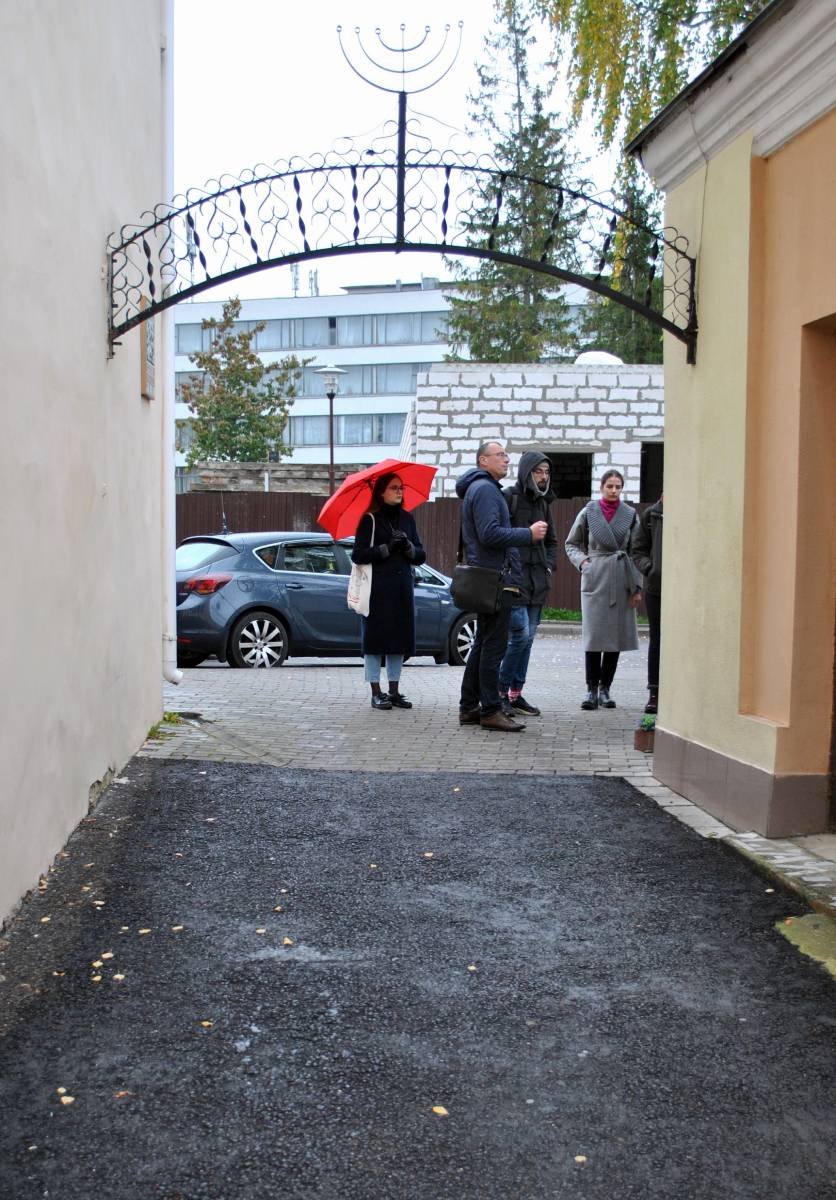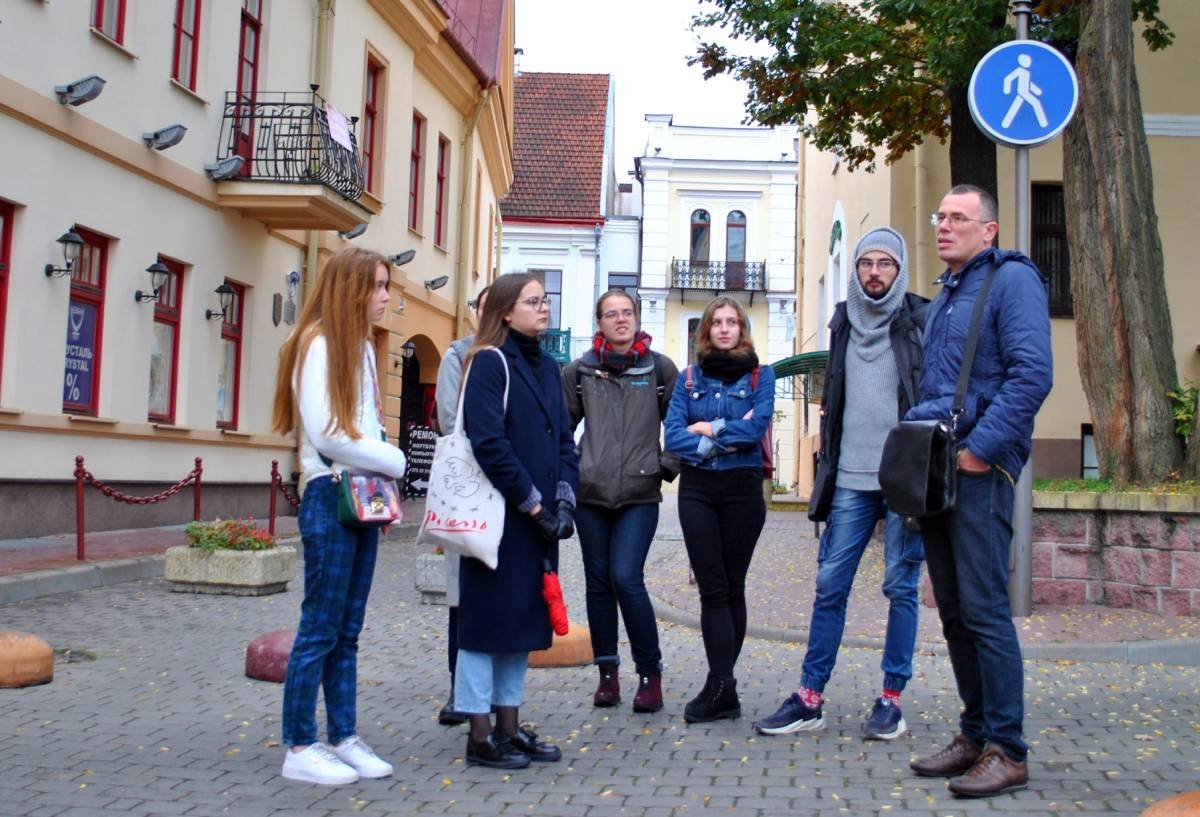
At the end of the seminar, the project coordinator in Grodno, Ales Radziuk, gave a tour of Jewish Grodno. It was noticed that the city had various thematic routes, which were traditionally guided by tourists, but there was no developed guide on the Jewish heritage yet. We learnt that at different times in the twentieth century, the Jewish population of Grodno constituted half the total population. The city’s appearance and its inner world changed dramatically after WW II however.
Ales Radziuk showed the students the borders of the ghetto no. 1. Today, the site where the entrance gate stood bears a memorial plaque – the only symbol commemorating the lives of thousands of Jews who perished here during the Holocaust. There was also ghetto no. 2 in the other part of the city, but there is nothing left to remind us of its existence today.
Students visited the Great Choral Synagogue, whose history dates back to the 16th century. During the last war, it was used as a gathering point for Jews before sending them to death camps. In Soviet times they used this beautiful building as a warehouse, and it was only in the 1990s that the synagogue was returned to the Jewish community. It is open today, so everyone can see one of the most beautiful synagogues in Europe with their own eyes.